The Holy Grail of Uptime: Why The Site Reliability Workbook is Still Your Best Survival Guide
Still chasing 100% uptime? Discover how the SRE Workbook uses SLOs, error budgets, and automation to build reliable systems without constant firefighting.
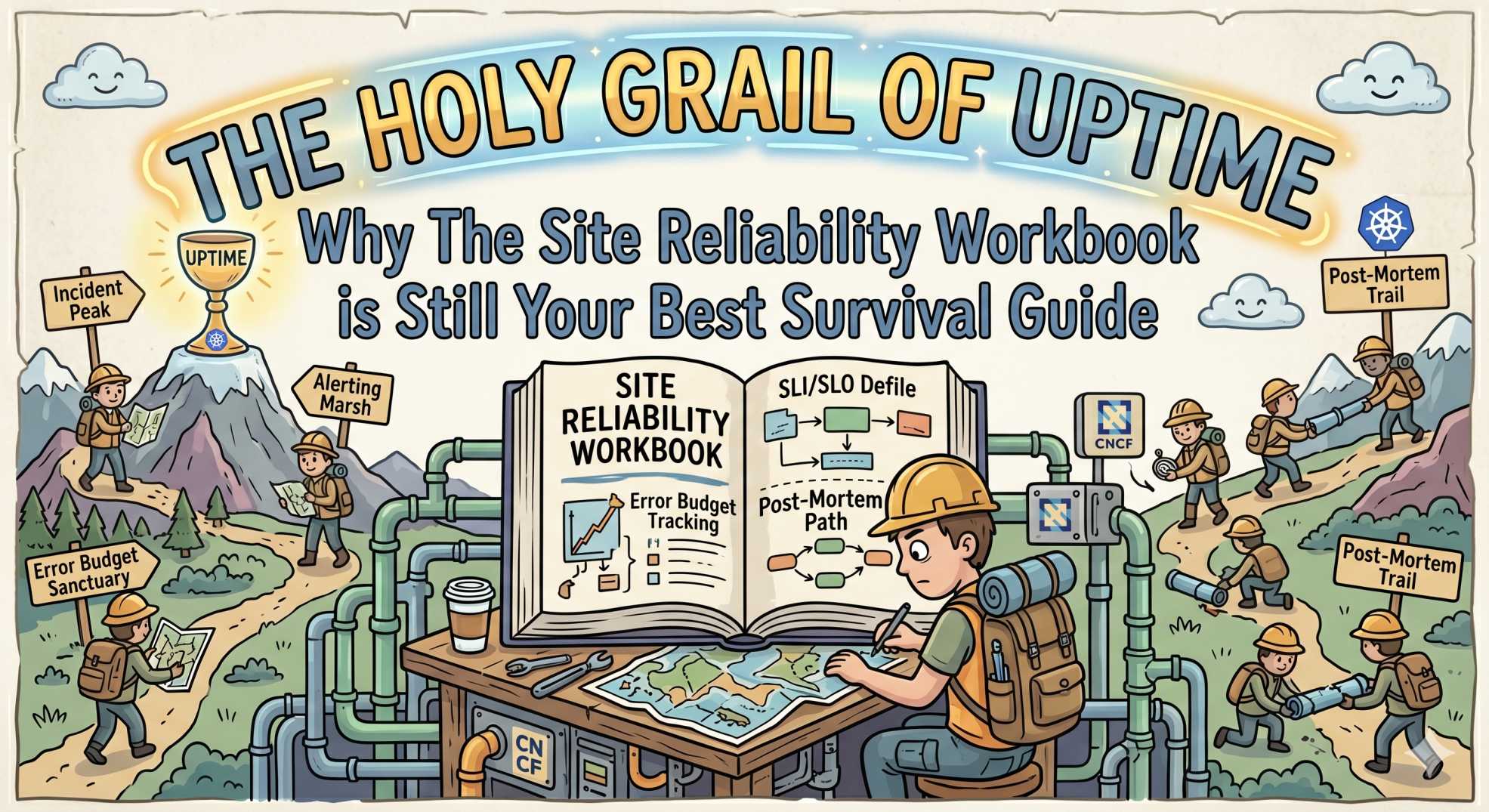
The "SRE Bible" is a heavy read, but it’s the difference between a team that’s constantly firefighting and one that actually has time to innovate. At DevOps Inside, we’ve spent years dissecting these principles to see how they actually survive in the wild, outside the pristine corridors of Mountain View.
If the first Google SRE book was the "Theory of Everything," The Site Reliability Workbook is the "Field Manual." It’s the book that tells you exactly how to stop your infrastructure from becoming a sentient ball of chaos.
We’ve all heard the buzzwords: SLOs, Error Budgets, and Toil. But most teams treat these like New Year’s resolutions, great in January, forgotten by February when a database migration goes sideways.
Let’s break down why this workbook is the secret sauce for modern, stable infrastructure, and how these rules are evolving for the AI era.
1. The SLO: Your "Social Contract" with the Business
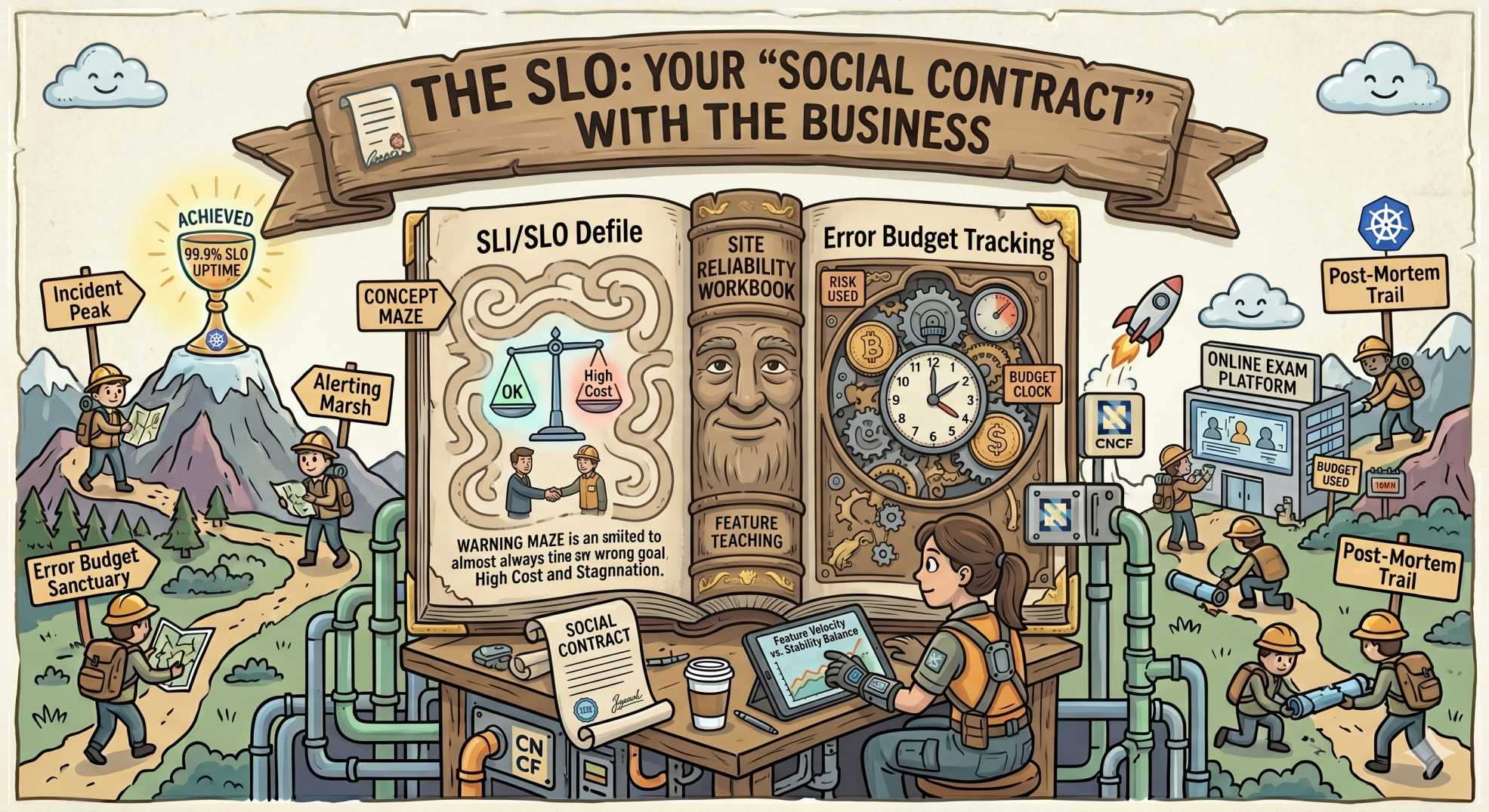
In the workbook, Google emphasizes that 100% availability is almost always the wrong goal. Why? Because it’s too expensive and it stops you from shipping features.
The Reality: Imagine you’re running a high-stakes online exam platform. If you aim for 100% uptime, you can never update your code because every change is a risk.
The SRE Way: You set a Service Level Objective (SLO) of 99.9%. That 0.1% is your Error Budget. It’s your permission to fail, to experiment, and to push that risky update on a Tuesday afternoon.
2. Death to Toil: Stop Being a Human Bash Script ⚙️
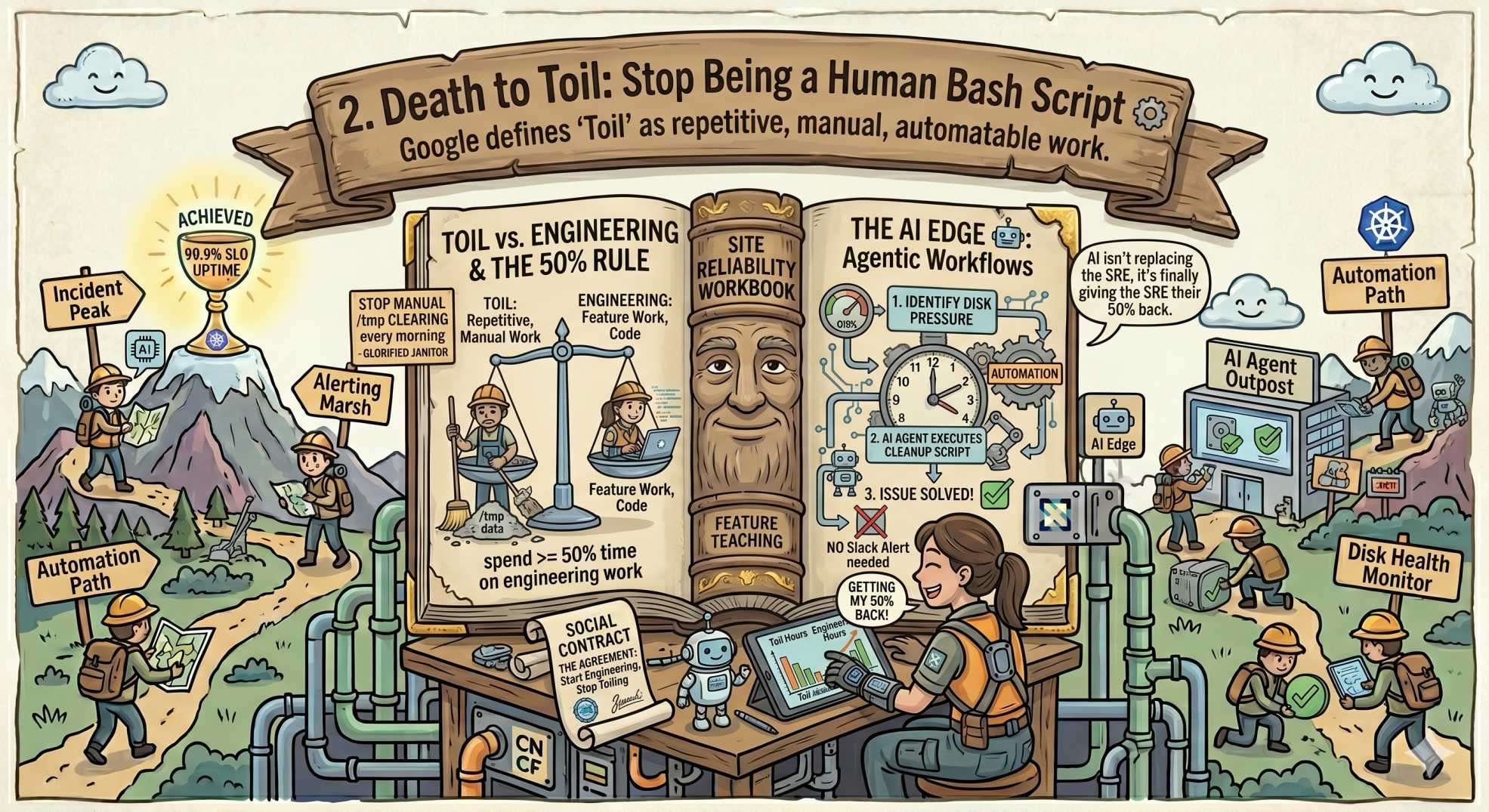
Google defines "Toil" as the kind of work that is manual, repetitive, and automatable. If you’re manually clearing a full /tmp directory every morning, you aren't an SRE, you’re a glorified janitor.
The 50% Rule: The workbook suggests that SREs should spend at least 50% of their time on engineering work rather than just running the system.
The AI Edge 🤖: This is where agentic workflows are changing the game. We’re moving into an era where AI agents can handle the toil by identifying disk pressure and executing cleanup scripts before you even get a Slack alert. AI isn't replacing the SRE; it’s finally giving the SRE their 50% back.
3. Blameless Postmortems: The Culture of Learning
The workbook dedicates a massive section to what happens after things break. If your post-incident meeting involves finding someone to blame, your culture is broken.
The Strategy: Focus on the "How" and "What," not the "Who."
Example: A junior engineer accidentally deletes a production namespace. A blame culture fires the engineer. A workbook culture asks: Why did our RBAC allow this, and how do we build safeguards like approval gates to prevent it?
🤖 SRE 2.0: Integrating Predictive Intelligence
The original workbook was written before the LLM wave, but the principles are perfectly aligned with modern systems.
Predictive SLOs: Instead of reacting when a metric crosses a threshold, teams can analyze historical patterns and act before failure happens.
Automated Runbooks: Imagine your runbooks not as static docs, but as actionable systems that can guide or even execute recovery steps based on context.
The Verdict
The Site Reliability Workbook isn’t about being perfect. It’s about being disciplined. It’s about accepting that systems will fail and building the processes to handle that failure without chaos.
💬 Quick Question: Are you still chasing 100% uptime, or have you embraced the power of the Error Budget?
"Reliability isn’t about preventing failure. It’s about building systems that fail gracefully and recover intelligently."