Kubara: The Open-Source "Lego Set" for Platform Engineering
What if building a Kubernetes platform felt like Lego? Discover how Kubara simplifies platform engineering with GitOps, reusable components, and faster setup.
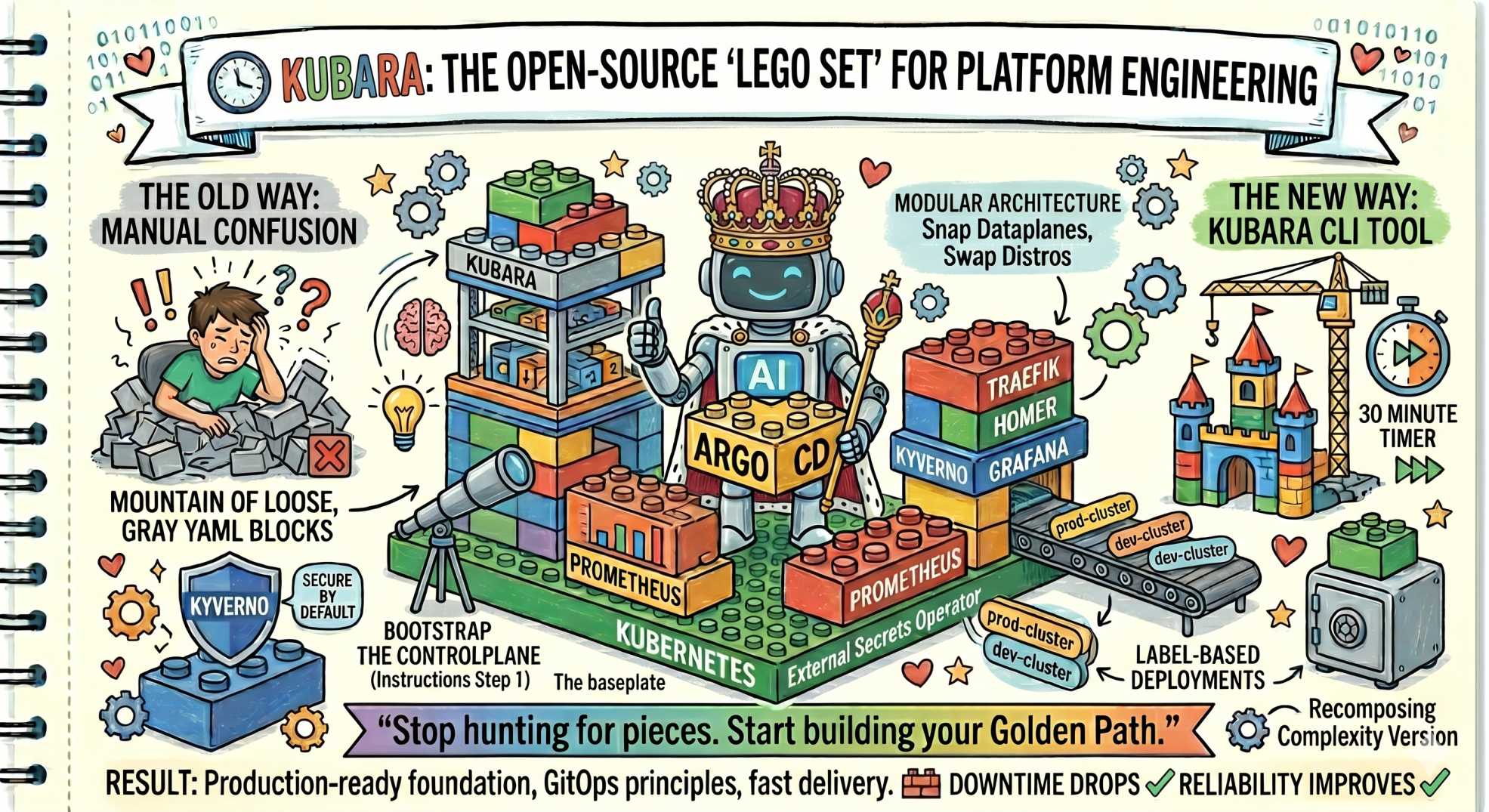
At DevOps Inside, we’ve spent a lot of time talking about the “Kubernetes Complexity Tax.” You know the one. The hidden cost of having four different “standards” for deploying the same microservice across dev, staging, and production.
We’ve all tried to build our own Internal Developer Platform. It usually starts with a few bash scripts, grows into a massive CI pipeline, and eventually turns into a tangled mess of YAML that only one person truly understands.
Now there’s a new approach trying to clean this up: Kubara.
If Kubernetes is the engine, Kubara is the factory floor that organizes everything around it.
It is not another tool you bolt on top. It is a structured framework that helps you assemble a complete platform using pre-defined building blocks instead of stitching everything together manually.
Kubara focuses on reducing setup complexity by providing opinionated, preconfigured components so teams can move from an empty cluster to a working platform much faster.
The “Standardized Modular” Approach
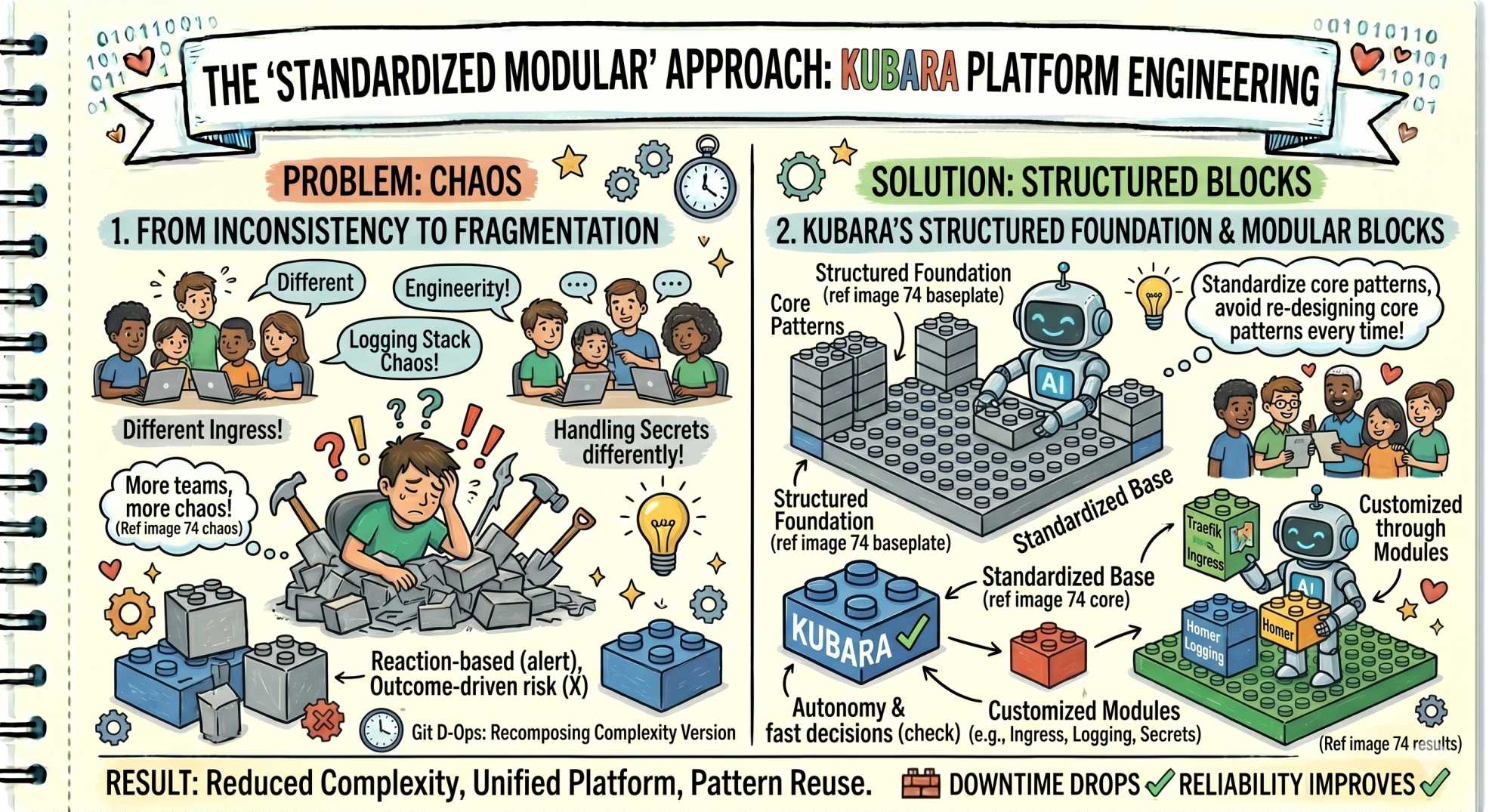
Most platform problems come from inconsistency.
Different teams use different ingress setups, different logging stacks, and different ways of handling secrets. Over time, this creates what can only be described as platform chaos.
Kubara solves this by treating your platform like modular blocks.
Instead of designing everything from scratch, you start with a structured foundation and plug in components based on your needs.
The idea is simple:
- Standardize the base
- Customize through modules
- Avoid reinventing core patterns every time
This dramatically reduces decision fatigue and long architecture debates.
Why GitOps Is the Backbone
Kubara is deeply rooted in GitOps, and that is not optional.
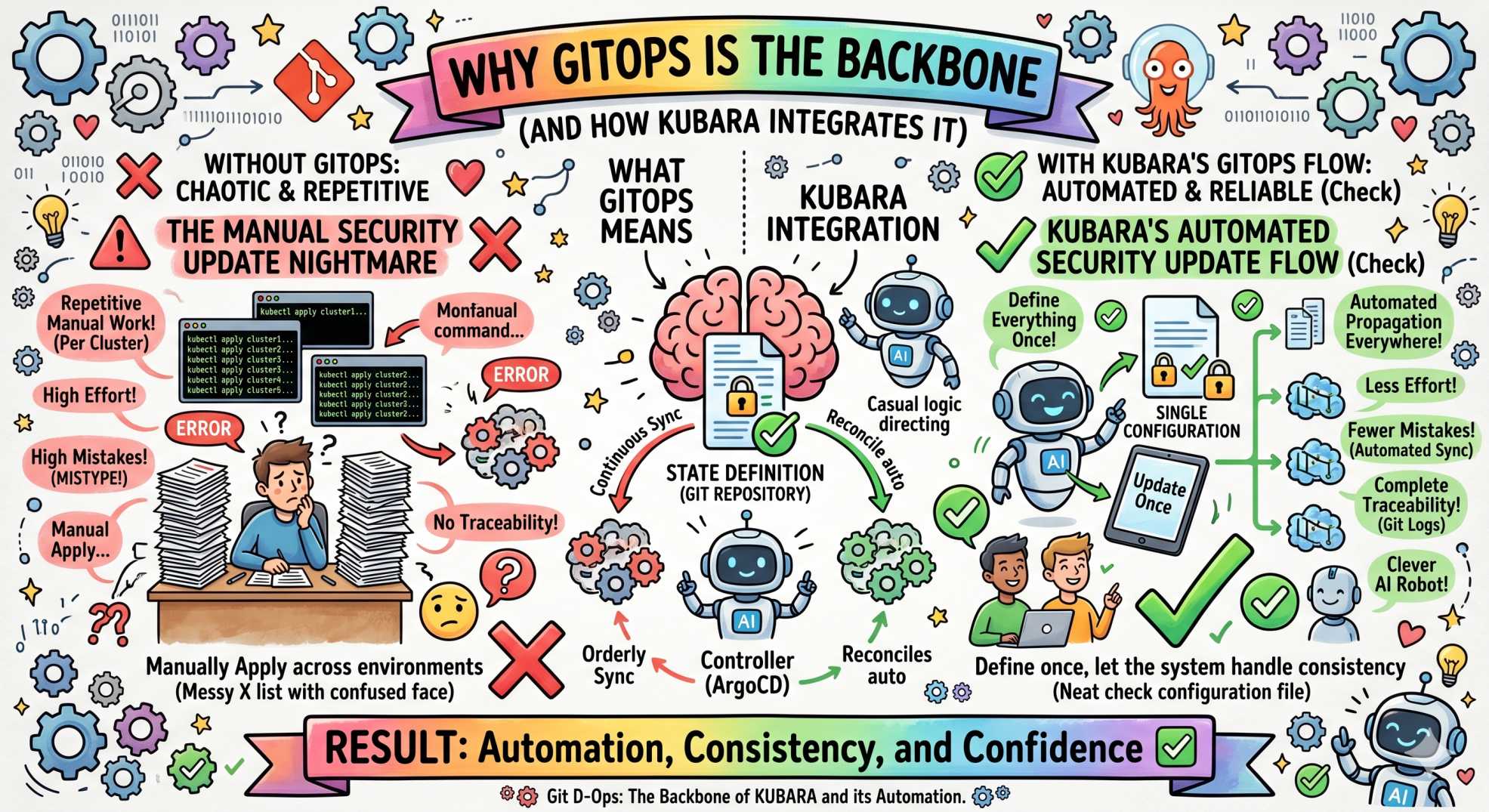
GitOps means your entire system state lives in Git, and your cluster continuously syncs to match it.
With tools like ArgoCD acting as the controller, changes pushed to Git automatically reconcile across clusters without manual intervention.
In practical terms, this means:
Instead of manually applying changes across environments, you define everything once and let the system handle consistency.
Real-world scenario:
You need to roll out a security update across multiple clusters.
Without GitOps, this becomes repetitive manual work.
With Kubara’s GitOps flow, you update a single configuration, and the system propagates it everywhere automatically.
Less effort, fewer mistakes, and complete traceability.
Built for Real Platform Problems
Kubara is not trying to replace Kubernetes tools. It aligns them.
It bundles commonly required components like observability, security, networking, and deployment workflows into a coherent structure instead of leaving you to assemble them piece by piece.
That matters because most platform engineering time is not spent building new things.
It is spent integrating tools that were never designed to work together cleanly.
Kubara reduces that integration burden.
The AI Angle: Why This Structure Matters
This is where things get interesting.
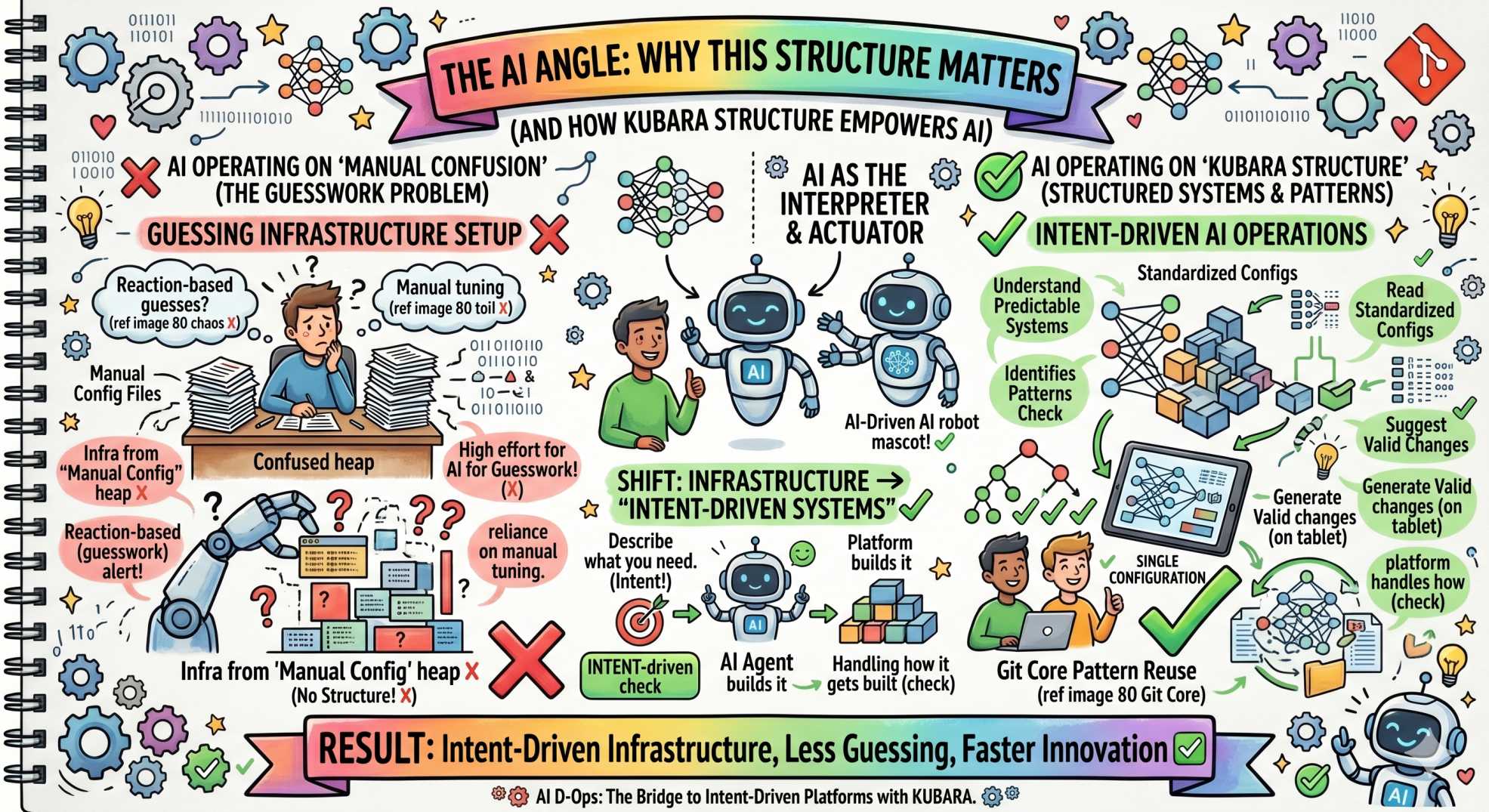
Modern AI workflows depend heavily on structured, predictable systems.
Kubara’s modular and declarative setup makes it easier for AI agents to understand and operate on your infrastructure.
Instead of guessing how your platform is built, an AI system can:
- Read standardized configurations
- Identify patterns across environments
- Suggest or generate valid changes
This shifts infrastructure from “manual configuration” to “intent-driven systems.”
You describe what you need.
The platform handles how it gets built.
Why Not Just Use a Managed Platform?
Managed platforms look attractive until you need flexibility.
The moment your requirements go beyond what the provider supports, you hit limitations.
Kubara avoids that problem.
It is open source, cloud-agnostic, and fully customizable.
You are not locked into someone else’s roadmap.
You own the structure, the modules, and the decisions.
The Bottom Line
Platform engineering is no longer about building everything from scratch.
It is about creating consistency, reducing chaos, and giving developers a reliable path to ship.
Kubara does not remove complexity completely.
But it organizes it.
And in modern DevOps, that is often the difference between scaling smoothly and constantly firefighting.
Final Thought
Are you still stitching your platform together one YAML file at a time, or are you ready to standardize how your systems evolve?
💬 Quick question: Would you trust a modular platform like this in production, or do you still prefer full control over every component?
“Great platforms are not built by adding more tools. They are built by making fewer decisions, better ones.”