The "Death" of DevOps and The Rise of Platform Engineering
Is DevOps dead? Discover why platform engineering is rising, helping teams build internal platforms that simplify workflows and boost developer productivity.
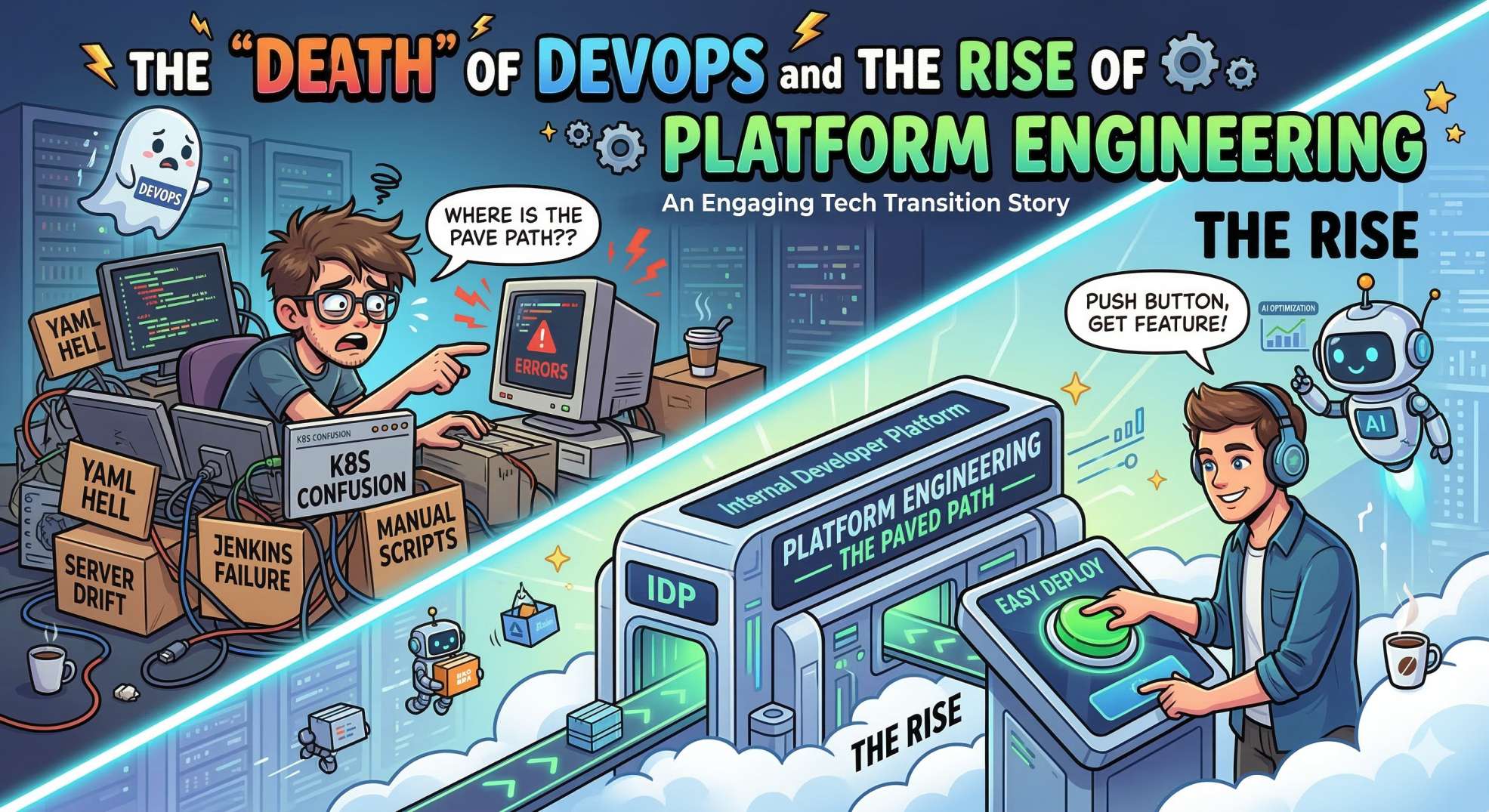
Is DevOps Retiring? From Building Bridges to Paving "Golden Paths" with AI
We’ve all seen the headlines. "DevOps is Dead." "Long live Platform Engineering."
If you’ve been following my "Layer by Layer" series, you know I don't believe DevOps is a tool; it's a culture. So, how can a culture "die"?
It doesn't. It evolves.
Think back to the early days. DevOps promised us a world where developers could "build it and run it." But as we added Kubernetes, service meshes, multi-cloud security, and observability stacks, that "bridge" we were building between Dev and Ops started to look more like a cognitive tax. Developers weren't just writing code anymore; they were drowning in YAML and becoming "accidental SREs."
This is where Platform Engineering enters the story.
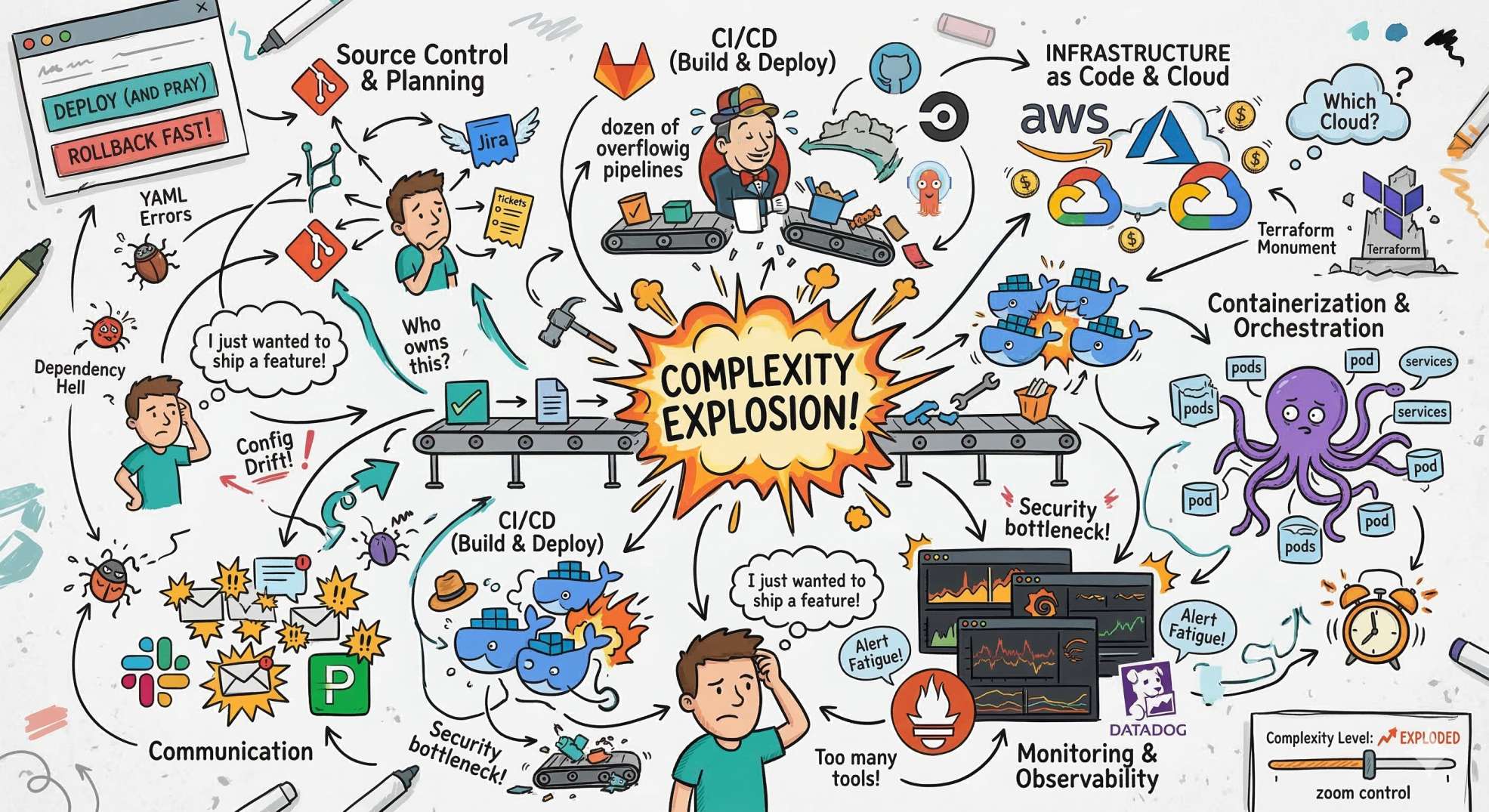
From "You Build It, You Run It" to "You Build It, We Enable It"
Platform Engineering isn't replacing DevOps; it’s the industrialization of it. Instead of every developer needing to be a Kubernetes wizard, Platform Engineers build an Internal Developer Platform (IDP).
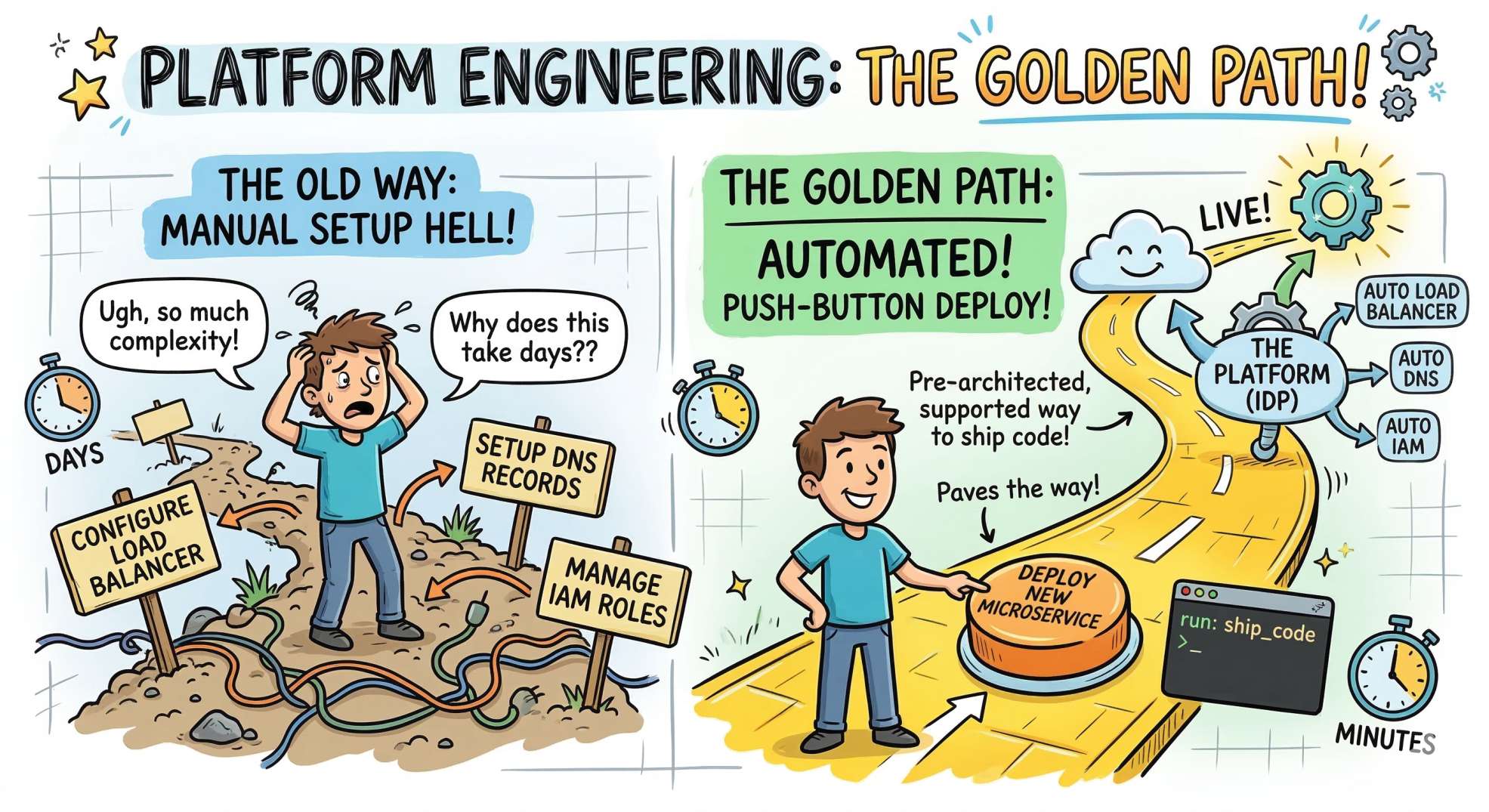
The goal? Golden Paths.
A Golden Path is a pre-architected, supported way to ship code. If a developer wants to deploy a new microservice, they shouldn’t have to configure a LoadBalancer, DNS, and IAM roles from scratch. They should be able to hit a button (or run a single command) and have the platform "pave the way" for them.
A "Real World" Example:
Imagine a developer named Rahul. In the "old" DevOps way, Rahul wants to ship a simple API. He spends three days fighting with an Ingress controller and googling: "Why is my AWS IAM role not talking to my S3 bucket?"
In the Platform Engineering way, Rahul uses a Golden Path. He runs a single command platform-cli create-service, and the platform automatically hands him a pre-configured GitHub repo, a CI/CD pipeline, and a secure "Lego set" of infrastructure. It’s the difference between being handed a pile of wood to build a chair and being handed a pre-drilled IKEA kit with instructions.
Enter the AI Architect: Moving Beyond Static Templates
On DevOps Inside, we’ve recently explored how "Agentic Workflows" are changing the game. In a traditional Platform Engineering setup, the IDP is a collection of static templates (Backstage, Terraform modules, etc.).
But in 2026, the IDP is getting a brain.
We are moving from Infrastructure as Code to Infrastructure as Intent. Imagine an IDP integrated with real AI tools like Pulumi Insights or Kubiya. Instead of searching through documentation to find the right Terraform module, a developer interacts with an AI platform agent:
Dev: "I need a high-availability PostgreSQL instance in US-East-1 with a 30-day retention policy."
AI Agent: "I’ve mapped that to our 'Production-Tier' Golden Path. I’m generating the PR now with the correct VPC peering and encryption-at-rest enabled."
The "Intent" Example:
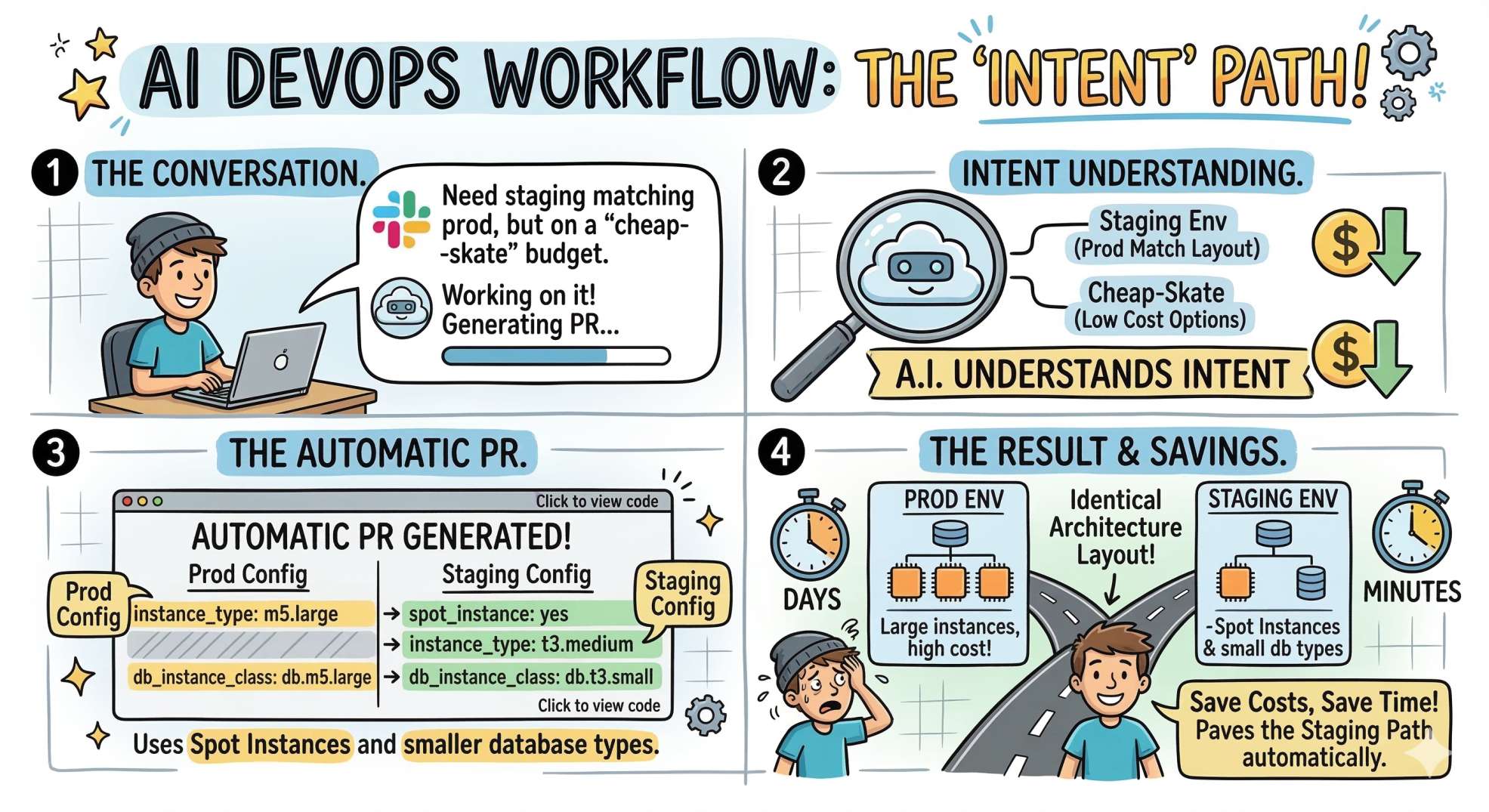
Instead of searching through documentation, a developer Slacks an AI agent: "I need a staging environment that matches production, but on a 'cheap-skate' budget." > The AI doesn't just give a link; it understands the intent. It automatically generates a PR using Spot Instances and smaller database types to save costs while keeping the architecture identical.
Real AI Integration: The "Clawd-Bot" Era of Operations
To make this platform truly "worth it," we have to stop treating AI like a glorified search engine and start treating it like a team member. Here are two real concepts that turn a boring platform into an intelligent one:
- Agentic Remediation (The Self-Healing Platform): Using tools like PagerDuty Runbook Automation combined with LLMs, the platform can do more than just alert you. If a pod is hitting an
OOMKillederror, an AI agent can analyze the historical memory usage, compare it against the cgroup limits, and automatically propose a "Right-Sizing" PR to the platform repository.
→ The Scenario: It’s Friday night. A service starts hitting anOOMKillederror. Traditionally, your phone screams at you. Now, an AI agent analyzes the memory spike, realizes the Java heap size is too low, and submits a Pull Request to fix the limits before you even finish your first slice of pizza. - Contextual Security with Snyk & AI: Instead of giving developers a list of 500 vulnerabilities, an AI-integrated platform uses "Reachability Analysis." It tells the developer: "You have a Critical CVE in this library, but our platform’s network policy blocks the port required to exploit it. Fix this Medium one instead, because it’s exposed to the public internet."
→ The Scenario: The AI tells the developer, "You have a Critical CVE in this library, but our platform’s network policy blocks the port required to exploit it. Fix this Medium one instead, because it’s actually exposed to the public internet." It’s like having a senior security engineer looking over your shoulder 24/7.
Is DevOps Actually Dead?
The "Death of DevOps" is a bit of a bluff. What is dying is the unmanaged toil of DevOps.
We are moving away from a world where "DevOps Engineer" means "the person who fixes Jenkins" and toward a world where Platform Engineering provides the foundation, and AI Agents handle the repetitive orchestration.
As I mentioned in my previous post about Boring Engineering, the most reliable systems are the ones where the complexity is hidden. Platform Engineering is the curtain, and AI is the stagehand.
The Bottom Line
If you’re a DevOps engineer today, don't fear the "Rise of the Platform." Embrace it. Your job is shifting from building individual bridges to designing the entire transit system. And with AI agents like Clawd-Bot helping you monitor the traffic while you sleep, the future of the "bridge" looks brighter than ever.
Quick Question: What’s your take? Is your team building an IDP, or are you still manually "bridging" the gap? Let’s discuss in the comments below!
"Stop building the bridge every morning; build the platform once, let the AI handle the tolls, and finally go get some sleep."