I Lost 6 Months Learning DevOps Wrong: Here’s the Path I Wish I Took
Learning DevOps but feeling stuck? Discover the roadmap I wish I had followed earlier—focused on fundamentals, real projects, and practical skills.

Learning new technology usually feels exciting. You explore, experiment, break things, and fix them. That’s how real skill is built. But when I started learning DevOps, I did none of that. I watched tutorials, jumped between topics, felt “productive,” and learned almost nothing. Six months had passed before I understood a hard truth: I wasn’t learning DevOps. I was consuming DevOps content. If you’re starting DevOps today, this story might save you months. ⚡
The Day I First Heard the Word “DevOps”
Back in college, I was learning frontend development, HTML, CSS, JavaScript, and a little React. My apps worked, but only on my laptop. Then one random tech video mentioned cloud careers, high-paying roles, and global-scale applications. One word kept repeating: DevOps. They said DevOps engineers deploy applications so real users can access them anywhere. That idea hit me “So this is how real products leave the laptop.” That curiosity pulled me in. 🚀
Mistake #1: Jumping In Without a Map
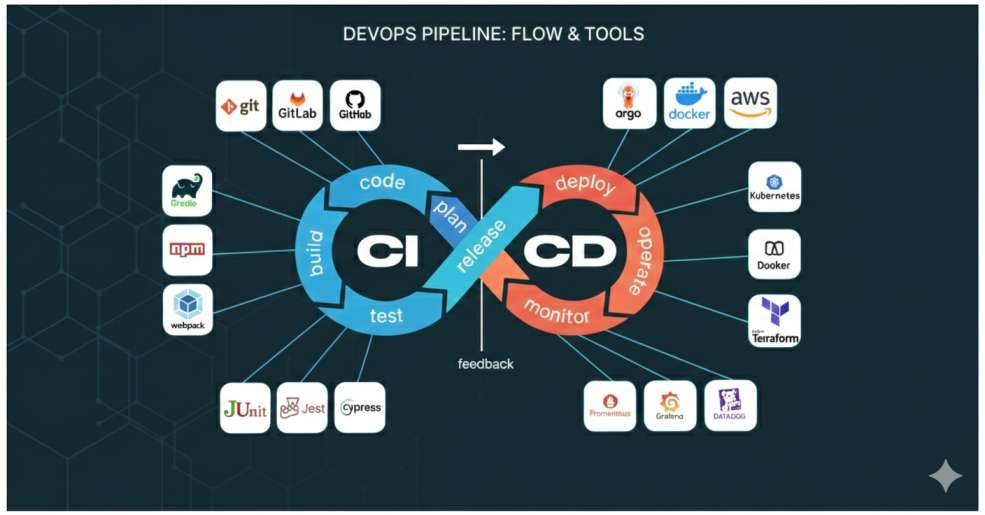
I searched “DevOps tutorial,” and what I saw was overwhelming: Docker, Kubernetes, AWS, CI/CD, Linux, networking; big tools, big diagrams, big promises. People warned me that DevOps was for experienced developers, and beginners often get lost. I ignored it, thinking that starting early meant getting ahead. Instead, I got overwhelmed.
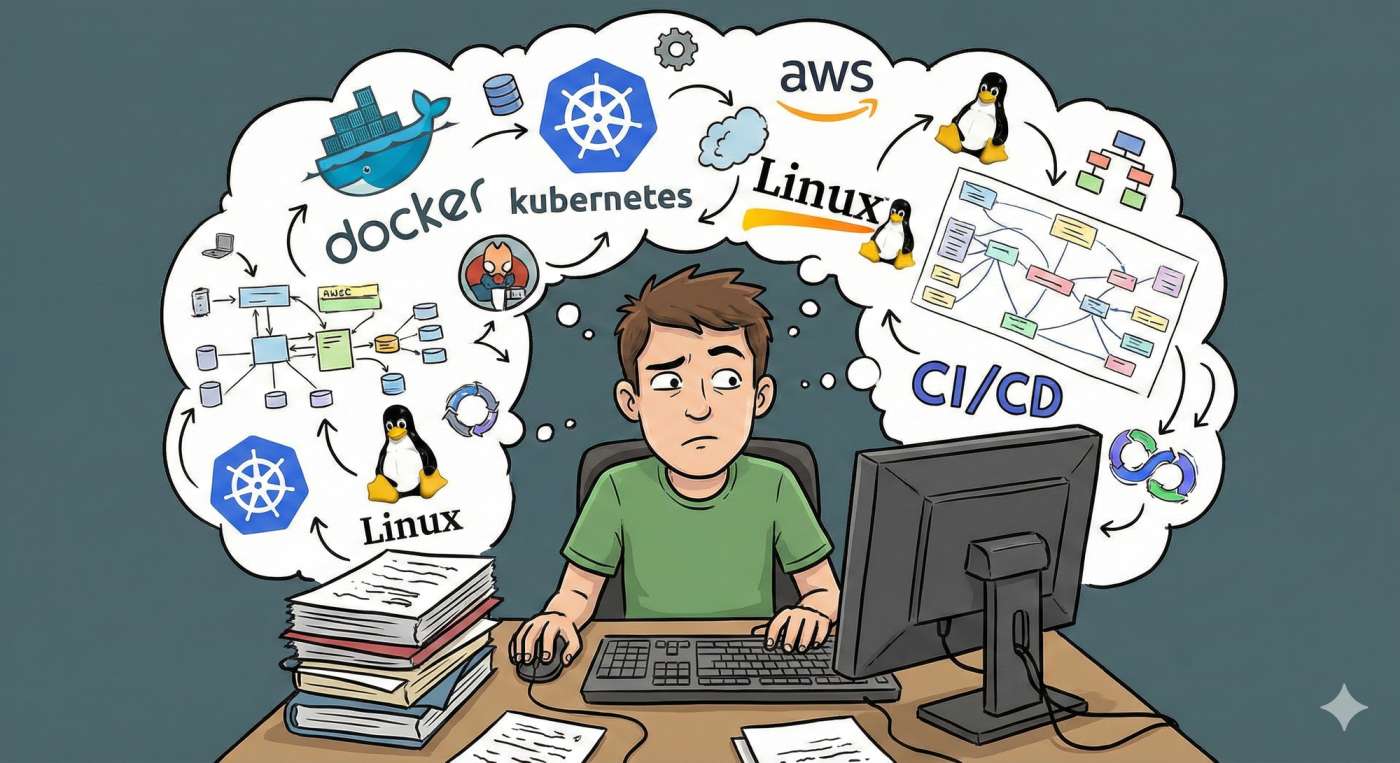
Months of Watching Instead of Building
My routine looked serious. One day Linux, next day Docker, then AWS, then Kubernetes. Every day felt productive. But in reality, I built nothing, deployed nothing, and owned nothing. I was just scrolling through tutorials. The biggest illusion was this: Watching feels like learning, until you try to build something yourself.
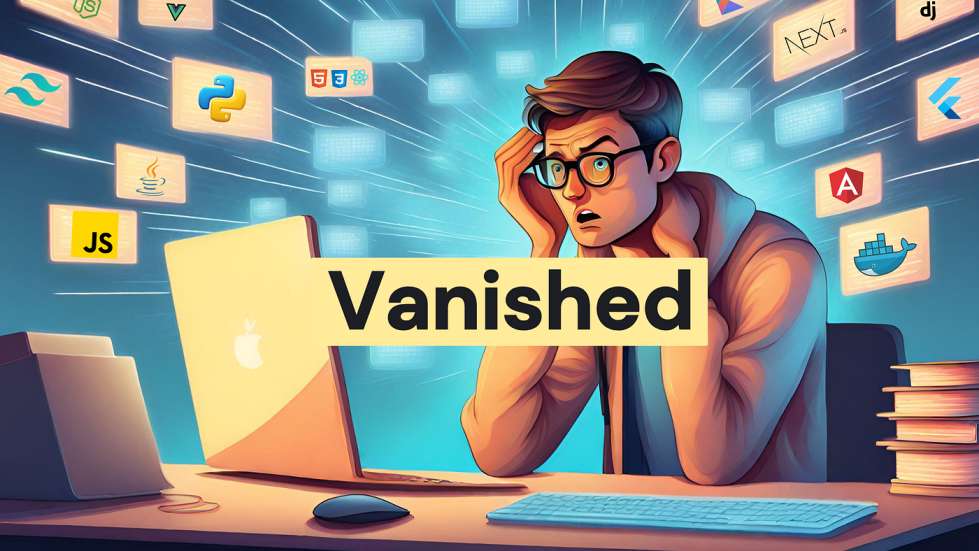
Why Tutorial Watching Feels So Good
Videos are comfortable. There’s no pressure, no failure, no responsibility. But DevOps is not about comfort. DevOps rewards breaking systems, debugging chaos, fixing what you broke, and owning what you run. Until something fails in your hands, it’s all theory.
Mistake #2: Avoiding Documentation
At that stage, I believed docs were boring, and videos were easier. Later, I learned a painful truth: Documentation saves hours. Blind video-following wastes days. Docs are structured, accurate, and written by tool creators. Videos are often outdated or incomplete. This realization came late, after months had already gone.
The Reality Check
After half a year, I asked myself: “Can I deploy my own application confidently?” The answer was painful: No. I had watched everything, but built nothing real. That’s when it clicked: Information is not skill. Execution is.
The Turning Point: Back to the Basics
I stopped chasing DevOps buzzwords and built one real backend application, not a tutorial clone, not a demo, but a real project with authentication, database integration, environment variables, and error handling. Then I deployed it. Everything broke. Ports failed, containers exited, configs crashed, logs confused me. And finally, I started learning. 🔧
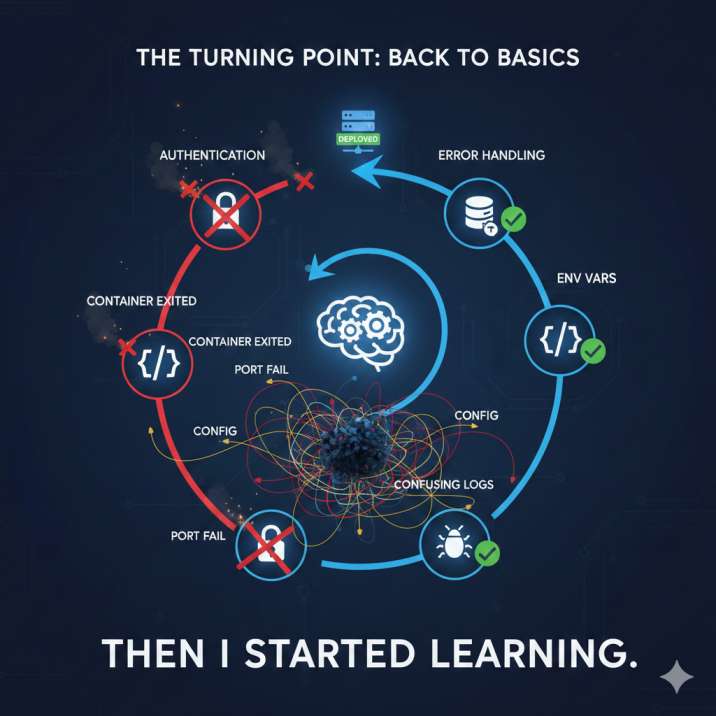
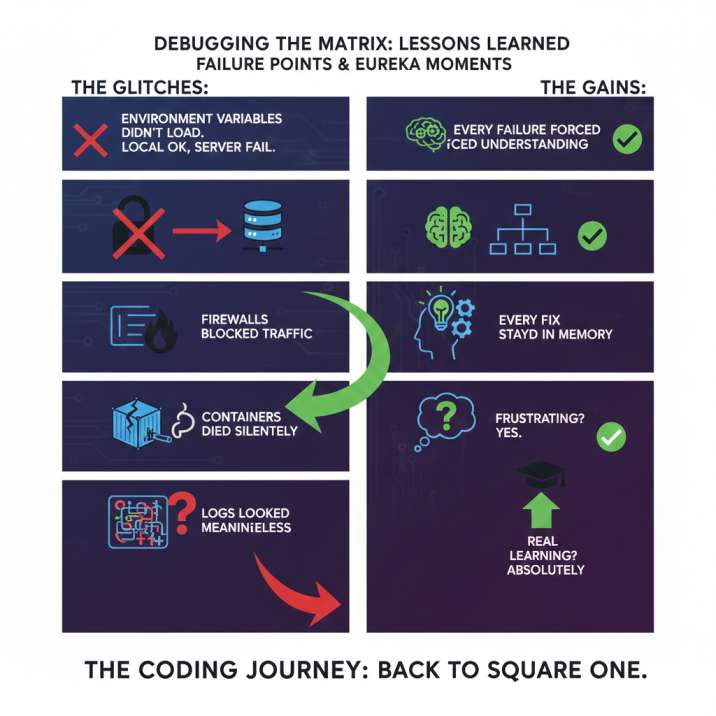
What Actually Went Wrong (And Why It Helped)
Environment variables didn’t load. Apps ran locally but failed on servers. Firewalls blocked traffic. Containers died silently. Logs looked meaningless. Every failure forced understanding. Every fix stayed in memory. Frustrating? Yes. Real learning? Absolutely. 💡
What I Wish I Had Done From Day One
1) Build One Real Backend First
Before DevOps, understand what you’re deploying. Build APIs, connect databases, handle authentication, manage environment configs, and deploy your own backend. Without this, DevOps feels like driving a car you never built.
2) Make Docker a Daily Habit
Docker isn’t a “try once” tool. It should feel natural to write Dockerfiles, run containers, connect the app and database, and debug container crashes. Skipping Docker and jumping straight to Kubernetes is getting lost on purpose.
3) Learn Linux & Networking Practically
Not theory. Not certificates. Just connecting to servers, understanding ports, reading logs, and fixing running processes. DevOps stands on this foundation.
The Biggest Lesson
DevOps isn’t about tools first. It’s about systems, failures, recoveries, reliability, and ownership. You become a DevOps engineer the day your system breaks, and you know how to bring it back. 🧠
If You’re Starting DevOps Today
Follow this order: build and deploy one backend app, use Docker daily, learn Linux and networking as problems arise, move to CI/CD, and touch Kubernetes last. This order saves months.
Why Most Beginners Quit
They start with Kubernetes, don’t understand what they are deploying, feel lost, and quit. DevOps isn’t too hard. The learning order was wrong.
If You’re Still Reading
You’re not here for hype. You want real skill and real growth. DevOps didn’t become easier; I just stopped learning it the wrong way. And that changed everything. ✨
“DevOps isn’t the obstacle. A scattered learning strategy is.”