From Pipelines to Prompts: The New Language of DevOps
From pipelines to prompts: DevOps is evolving fast. Discover how AI-driven workflows are transforming automation, CI/CD, and modern engineering practices.
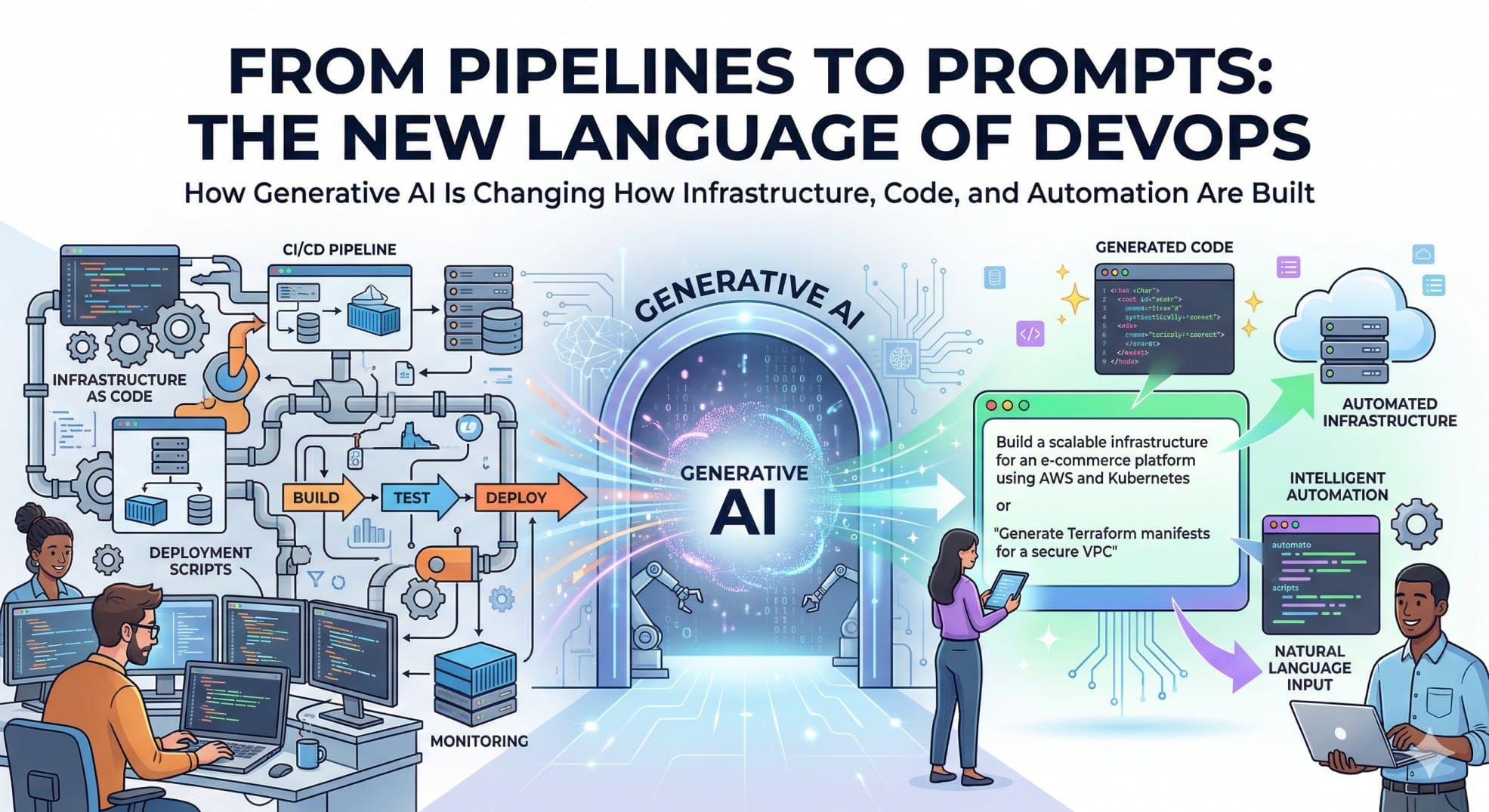
How Generative AI Is Changing How Infrastructure, Code, and Automation Are Built
For years, the DevOps playbook was simple:
If something repeats, automate it.
So we did.
We wrote Bash scripts, built YAML pipelines, glued together Jenkins jobs, and slowly assembled automation systems that looked impressive… but occasionally behaved like fragile machines held together by coffee and optimism.
At DevOps Inside, we’re always looking at how to build better bridges between Dev and Ops. Today, we’re witnessing a foundational shift. We aren't just moving faster; we're moving smarter. We are moving from Automation (static, rule-based) to Generative Intelligence (context-aware, adaptive).
Here is how Generative AI is redefining our world, and the real tools you can use to stay ahead.
1. The End of DevOps Copy-Paste Culture 🏗️
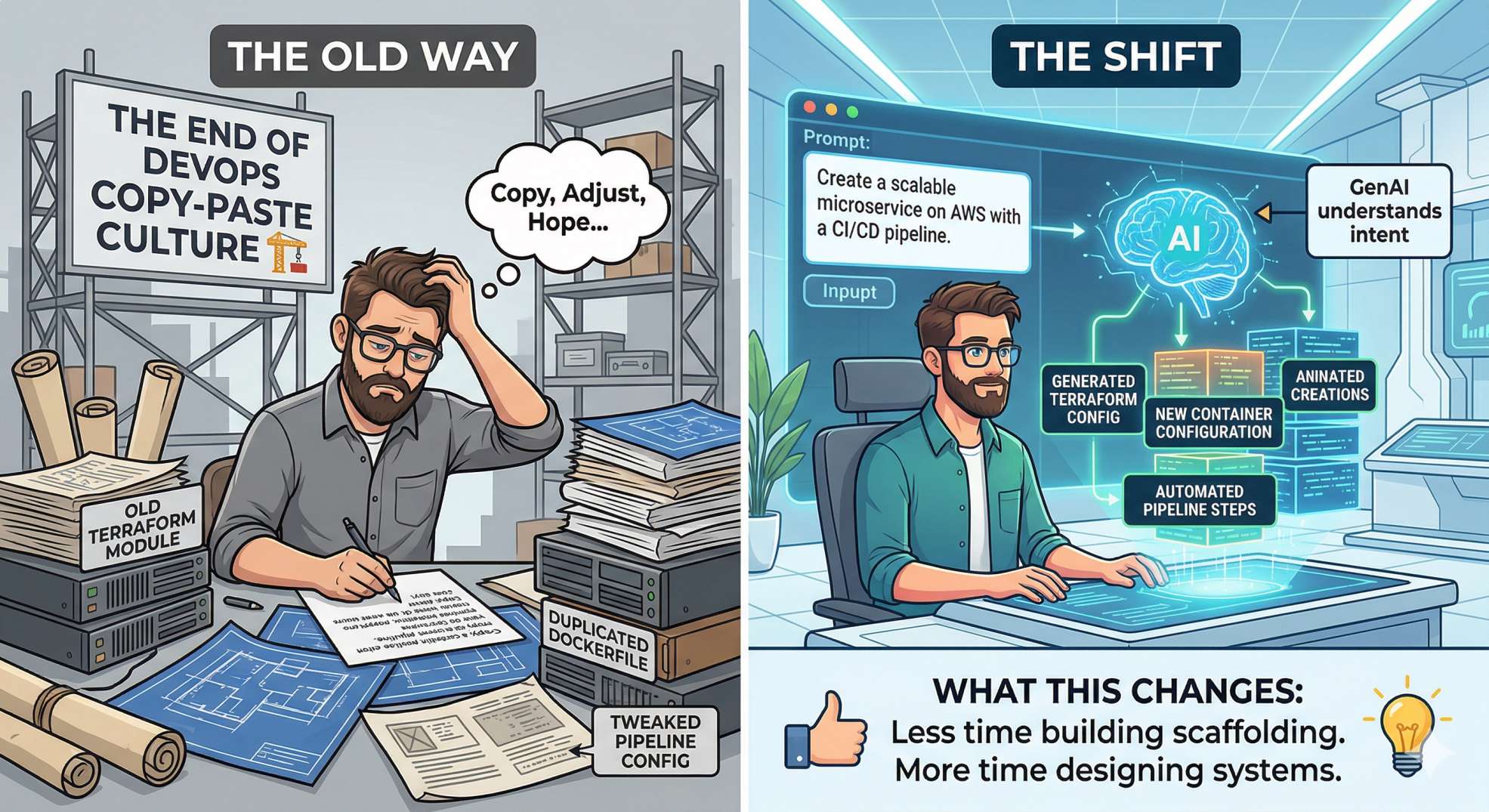
Setting up a new service used to involve a familiar ritual:
copy a Terraform module, adjust a few variables, duplicate a Dockerfile, tweak a pipeline configuration, and hope nothing breaks.
Generative AI changes that workflow. Instead of copying old templates, developers describe what they want, and tools generate the configuration from scratch.
The Shift: GenAI doesn't just copy; it understands intent.
- Example Tools: Modern assistants integrated into development environments can generate infrastructure templates, container configurations, and pipeline steps directly from prompts.
- What This Changes:
Less time building scaffolding.
More time designing systems.
2. Pipelines That Read Their Own Logs 🩹
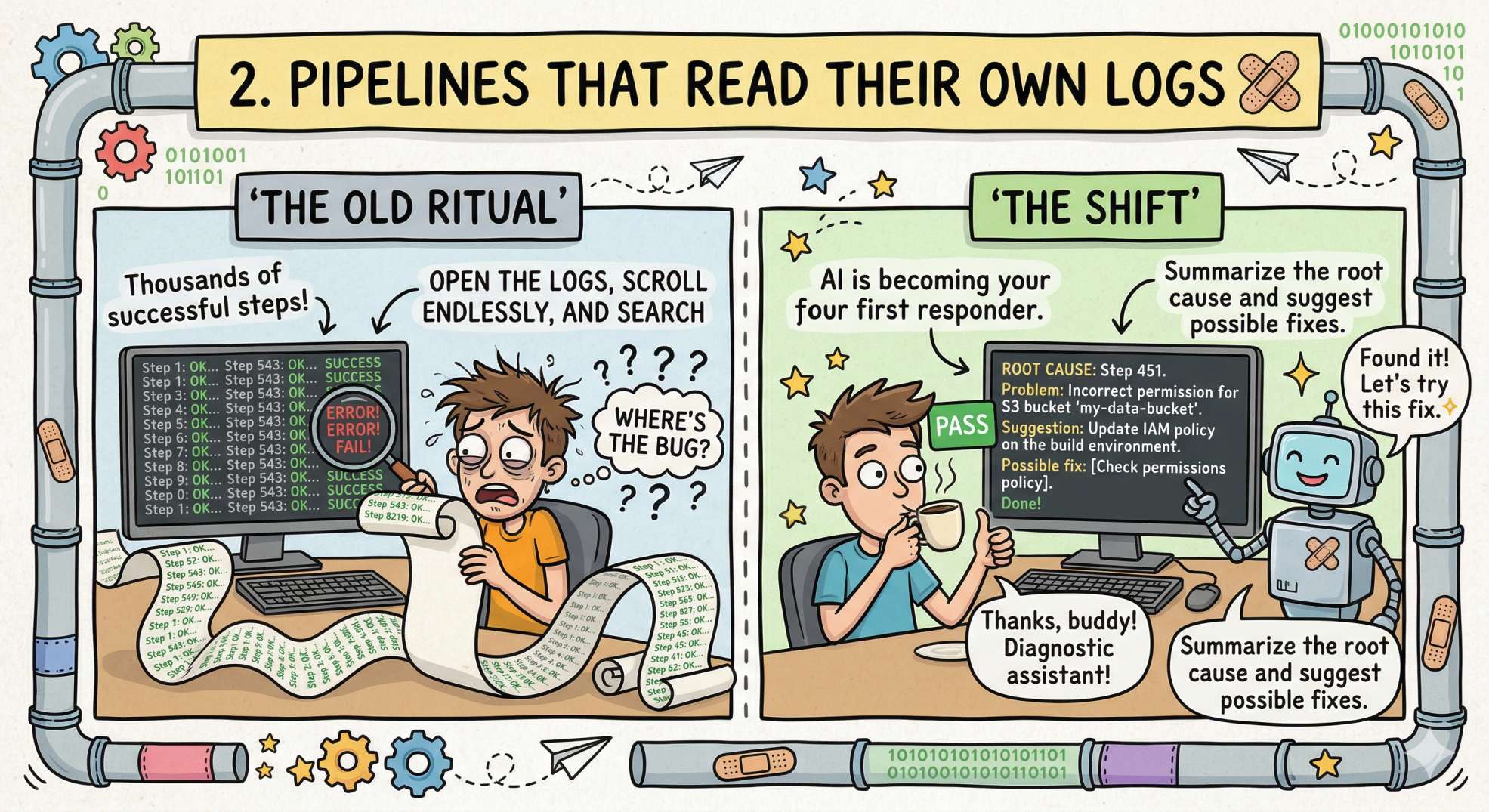
Anyone who has maintained CI pipelines knows the ritual:
open the logs, scroll endlessly, and search for the one error message hidden between thousands of successful steps.
AI-assisted tools are starting to analyze those logs automatically.
The Shift: AI is becoming your first responder.
- Example: Instead of simply marking a job as failed, intelligent build systems can summarize the root cause and suggest possible fixes.
- Why It Matters: This turns pipelines from passive tools into diagnostic assistants.
3. Documentation That Writes Itself 📚
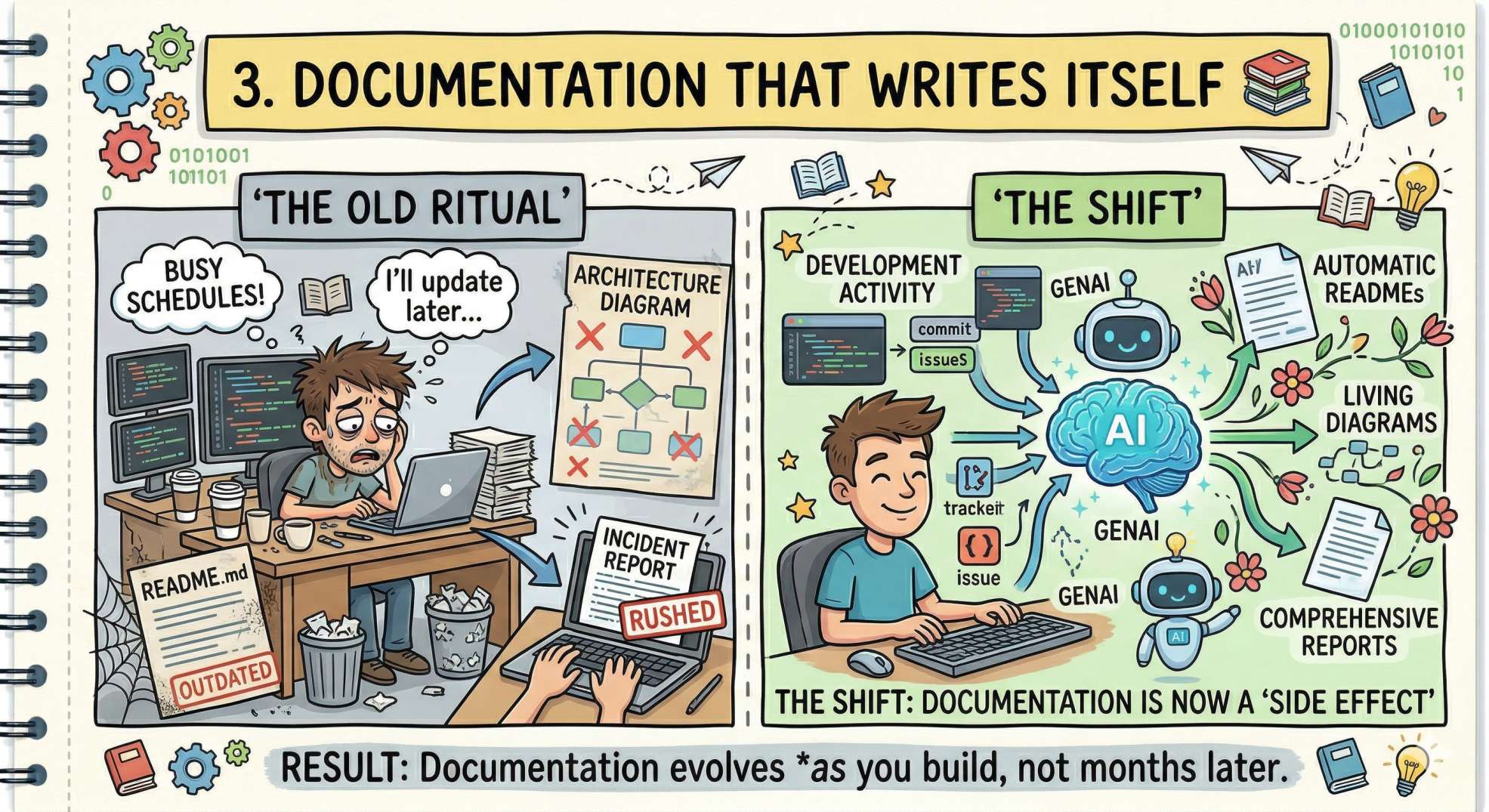
Documentation has always been the first victim of busy development schedules. Readme files age quickly, architecture diagrams become outdated, and incident reports are often rushed.
AI tools are starting to reverse that pattern by generating documentation from code, commit history, and issue tracking systems.
The Shift: Documentation is now a "side effect" of development, not a separate task.
- Result: Documentation becomes something that evolves alongside the system instead of something written months later.
4. Predicting Problems Before They Exist 🧪
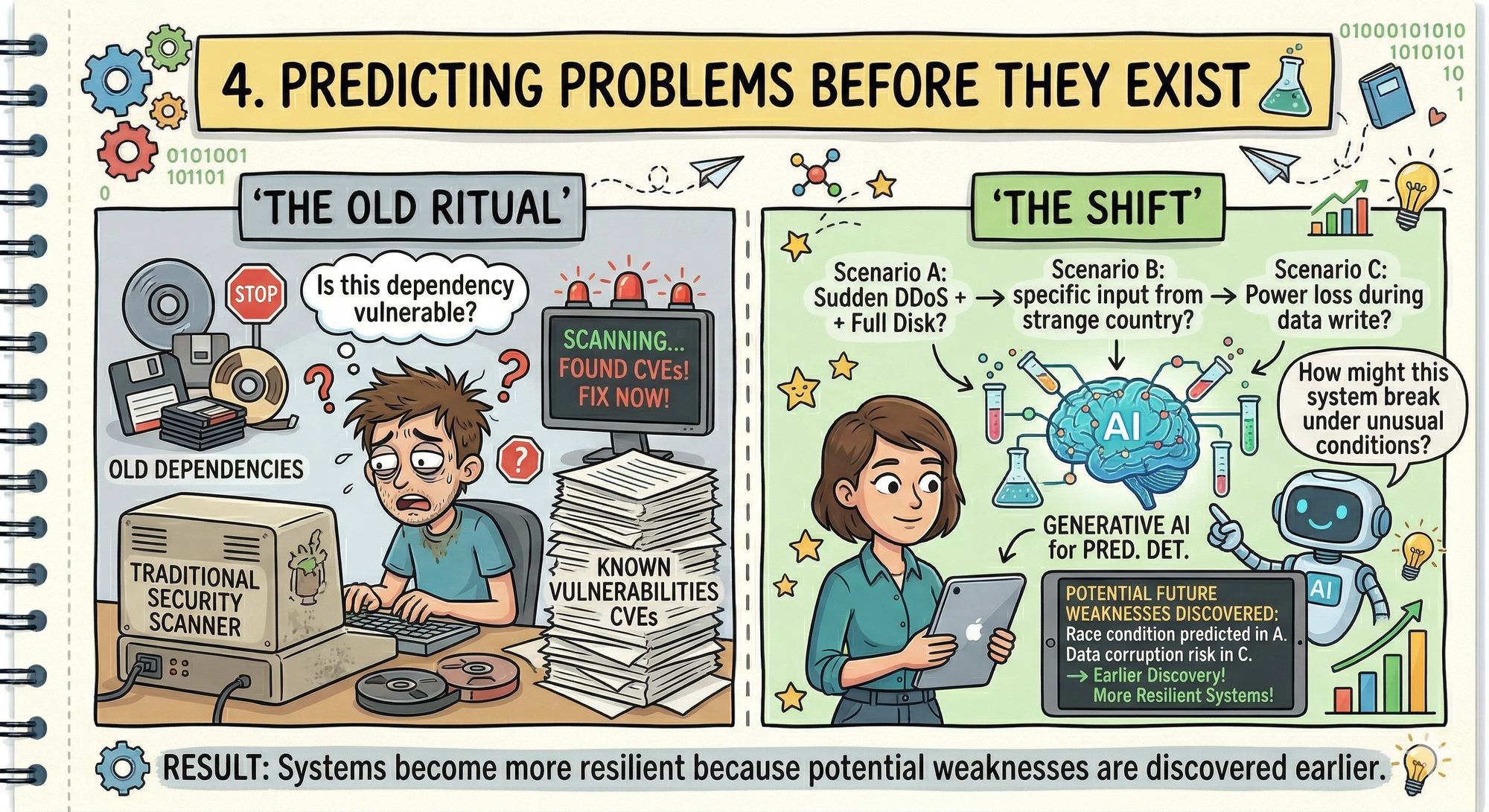
Traditional security scanners look for known vulnerabilities.
Generative AI tools can go a step further by exploring hypothetical failure scenarios.
Instead of asking “Is this dependency vulnerable?” they can ask “How might this system break under unusual conditions?”
The Shift: We are moving toward Predictive Vulnerability Detection.
- Why This Matters: Systems become more resilient because potential weaknesses are discovered earlier.
The Reality Check 🚩
Generative AI is powerful, but it also introduces new challenges.
AI Can Be Wrong
- Sometimes AI suggests solutions that look convincing but are technically incorrect.
Generated Code Still Needs Owners
- If AI produces thousands of lines of configuration or code, engineers still need to understand and maintain it.
Automation can reduce work, but it cannot remove responsibility.
💬 Quick Question: Has AI already saved you from a "Log Search" nightmare, or are you still scrolling through 10,000 lines of text like it’s 2015?
Let us know in the comments!
“We used to automate tasks. Now we supervise machines that invent new ones.”